
It starts with a scratch behind the ear. Then a chew on the paw. Before long, you are dealing with hot spots, hair loss, and a miserable kitty. If you have been down the rabbit hole of feline food allergies, you know the frustration of trying to find a diet that stops the itch without causing digestive distress.
For years, the standard solution was a hydrolyzed protein diet or a novel meat like venison. But in 2026, a new player has firmly established itself in the pet food aisle: insect protein.
Once considered a niche or “extreme” eco-friendly option, insect-based cat food has gone mainstream. But is it just a sustainability trend, or is it genuinely a superior hypoallergenic food for our feline friends? As pet parents look for cleaner, safer alternatives to factory-farmed meats, insect cat food is being touted as the ultimate solution for the sensitive cat with a sensitive stomach.
In this guide, we review the clinical evidence, nutritional breakdowns, and real-world results to determine if bugs are the future of your cat’s food bowl.
What is Insect Protein?
When we talk about insect protein in pet food, we aren’t suggesting you go into the garden and catch beetles for dinner. The insect meal used in modern formulations is a highly regulated, scientifically processed ingredient.
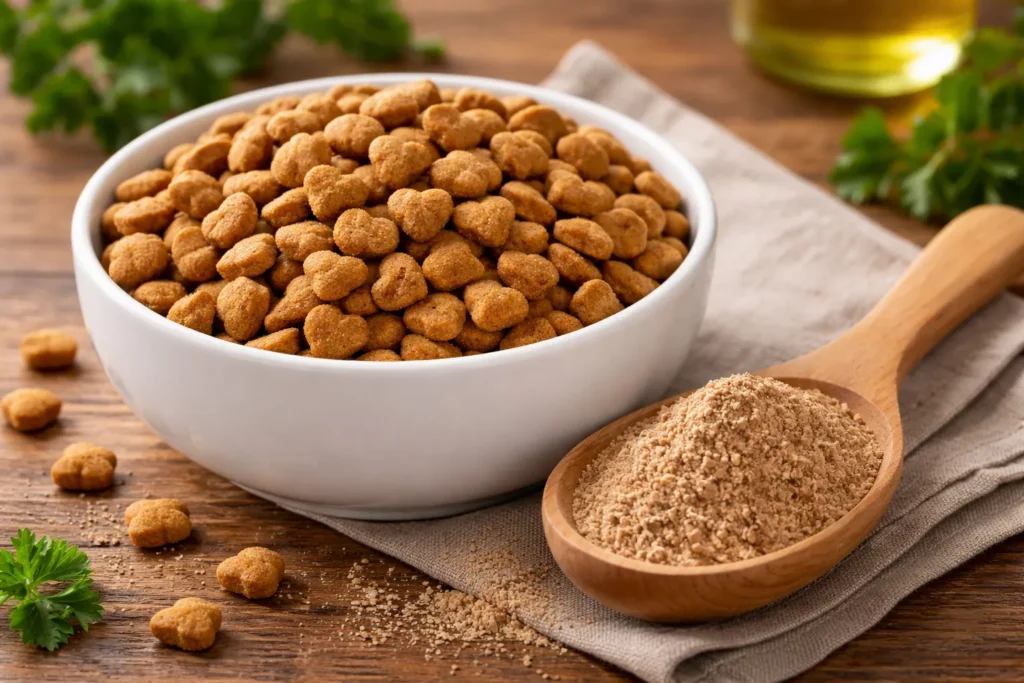
The primary species of insects used in the industry is the Black Soldier Fly (Hermetia illucens). Specifically, it is the black soldier fly larvae (BSFL) that are harvested. These larvae are nutritional powerhouses. They are farmed in controlled environments, fed on organic matter (often pre-consumer food waste), and then processed into a nutrient-rich powder or oil.
Sustainability Meets Nutrition
One of the biggest drivers behind the concept of insect-based diets is sustainability. Traditional animal protein sources like beef and chicken require massive amounts of land, water, and feed. In contrast, insect farming uses a fraction of the resources.
But for your cat, the benefit is biological. Insect protein is a high-quality, efficient source of protein that mimics the natural diet of small wild felids. After all, wild cats are opportunistic hunters who wouldn’t turn their noses up at a cricket or moth.
Why Insect Protein is Hypoallergenic
To understand why insects are a game-changer for cats with allergies, we first need to understand how food allergies work.
A food allergy occurs when a cat’s immune system mistakenly identifies a specific protein (the allergen) as a threat. The immune system attacks, leading to inflammation—usually manifesting as skin irritation, scab formation, or diarrhea. The most common culprits in regular cat food are chicken, beef, dairy, and fish.
The Novel Protein Advantage
The gold standard for diagnosing an allergy is an elimination diet, where you feed a protein your cat has never eaten before. This is where insect protein-based diets shine. Because black soldier fly is a “novel” protein—meaning your cat’s immune system has likely never encountered it—it does not trigger that defensive allergic response.
Insect vs. Hydrolyzed Protein
Veterinarians often prescribe hydrolyzed protein diets, where the protein is broken down chemically into pieces so small the immune system can’t detect them. While effective, these diets can be bitter and unpalatable.
Insect-based food offers a natural alternative. It is naturally hypoallergenic without needing to be chemically hydrolyzed. For many owners, it serves as a more palatable dietetic option that cats actually enjoy eating.
A Note on Cross-Reactivity
While insect-based diets are hypoallergenic for most cats, there is one exception. Insects are arthropods, related to crustaceans and mites. Studies indicate potential cross-reactivity for patients allergic to shellfish or dust mites due to a protein called tropomyosin. If your cat has a known, rare allergy to shellfish, consult your vet before switching to insect food.
Benefits of Insect Protein for Cats
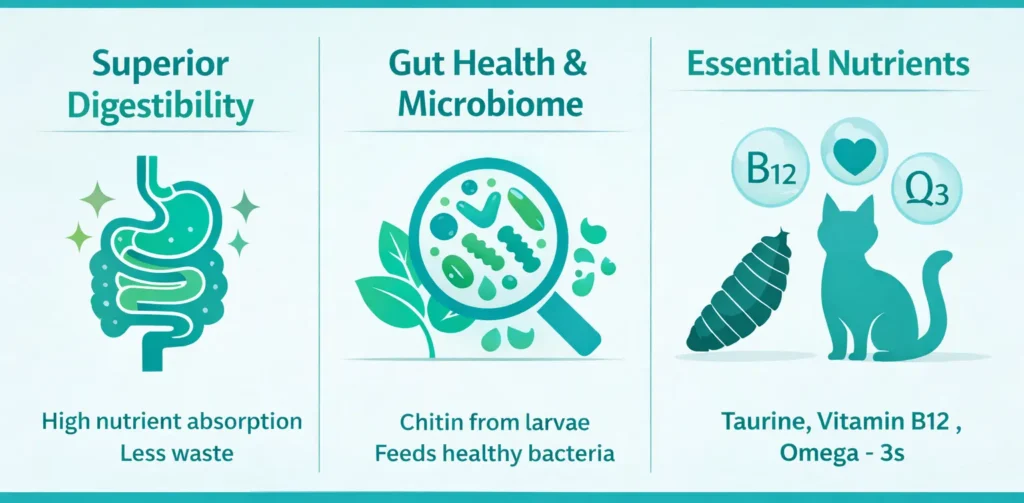
Beyond being hypoallergenic, insect meal offers a robust nutritional profile that rivals premium meats.
1. Superior Digestibility
Research published in the Journal of Animal Science and Technology (2025) highlights that insect protein is incredibly easy to digest. High digestibility means your cat absorbs more nutrients and produces less waste (a win for the litter box).
2. Gut Health and the Microbiome
The exoskeleton of the larva contains chitin, a type of fiber that acts as a prebiotic. This feeds the healthy bacteria in the gut. A healthy microbiome is essential for cats with digestive problems, as it regulates everything from nutrient absorption to immune function. If your cat struggles with gut issues, pairing an insect diet with microbiome-friendly practices can be transformative. You can read more about gut health in our guide on the best microbiome-friendly cat food for sensitive stomachs.
3. Essential Amino Acids and Nutrients
Cats are obligate carnivores, meaning they require specific nutrients found in meat.Black soldier fly larvae are naturally rich in essential amino acids, including taurine, which is critical for heart and eye health.
A high-quality insect-based cat formula will also be fortified to meet AAFCO standards, typically including:
- Vitamins and minerals: Essentials like Vitamin E, Vitamin B12, Niacin, Folic Acid, and Biotin for skin and coat health.
- Minerals: Ferrous sulfate (iron), Manganese, Sodium Selenite, Calcium Iodate, and Calcium Carbonate.
- Healthy Fats: Often supplemented withlinseedor insect oil for Omega-3s.
Potential Drawbacks and Considerations
While the benefits are compelling, insect-based pet food isn’t without its challenges.
Palatability: Will They Eat It?
Cats are notoriously fussy. While dogs and cats both consume insect protein, dogs are generally less picky. Some cats may take time to adjust to the smell or taste of insect cat food. However, modern formulations often use natural flavor enhancers (like liver or yeast) to make the kibble irresistible.
Availability and Cost
Because insect farming for pet food is still scaling up, insect-based cat food can be more expensive than standard dry cat food. It is often priced similarly to premium prescription diets.
Wet vs. Dry Options
Currently, the market is dominated by dry food. Finding a high-quality wet food made solely from insects is harder, though brands are beginning to launch pâté styles. This is important because hydration is vital, especially for the older cat.
Real Vet Review (2026): The Clinical Verdict
As we move through 2026, the veterinary consensus on insect protein has shifted from “novelty” to “necessity.”
Recent clinical studies, such as those published in Animals (Basel) in 2025, have demonstrated that dried black soldier fly larvae can safely support gestation, lactation, and growth in cats. The study found that kittens fed insect-based diets had excellent growth rates and bloodwork parameters within normal ranges.
What the Experts Say
Veterinary nutritionists are increasingly recommending insect food for pets with food sensitivities who have failed on other single protein diets.
The Pros:
- Safety: Confirmed by AAFCO ingredient definitions for use in adult dog and adult cat food.
- Skin Health: Significant reduction in dermatitis and itching in allergic cats.
- Sustainability: A massive reduction in carbon paw-print.
The Cons:
- Long-term Data: While 2025/2026 studies are positive, we still lack decadal data on lifelong feeding.
- Phosphorus/Calcium Balance: Insect meal is naturally high in calcium; formulations must be carefully balanced with potassium chloride and other minerals to ensure urinary health.
If your cat is overweight as well as allergic, insect protein’s lean profile can be beneficial. It pairs well with weight management strategies. For tips on managing weight while treating your pet, check out our article on low-calorie cat treats for weight loss.
Conclusion
The era of insect protein is here, and for the itchy, scratchy, sensitive cat, it is a welcome arrival.
Insect-based cat food offers a scientifically backed, sustainable alternative to traditional meats. It provides a truly hypoallergenic food source that sidesteps common food intolerances like chicken and beef. With a rich nutrient profile including essential amino acids, selenium, and taurine, it is a complete and balanced choice for your feline.
If you are tired of the cycle of itching, scab treatment, and stomach upset, it might be time to look beyond the farm and toward the farm of the future. As always, when feeding my cat a new diet, I recommend a slow transition over 7-10 days to allow their sensitive stomach to adjust.
Ready to try it? Consult your veterinarian about whether an insect-based elimination diet is right for your cat. It might just be the miracle meal you have been waiting for.